English
Views: 0 Author: Dalian Gaoteng Publish Time: 2026-08-14 Origin: Dalian Gaoteng
Recently, we have enriched our grinding media series with a new product—G50 Alumina Silicate Composite Grinding Balls.
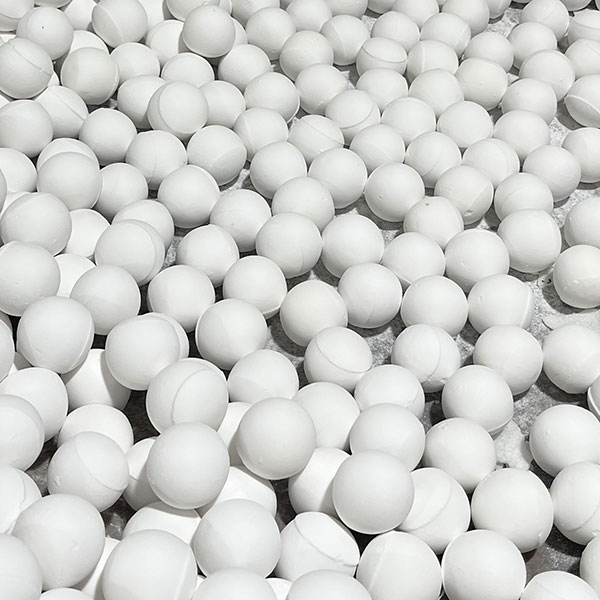
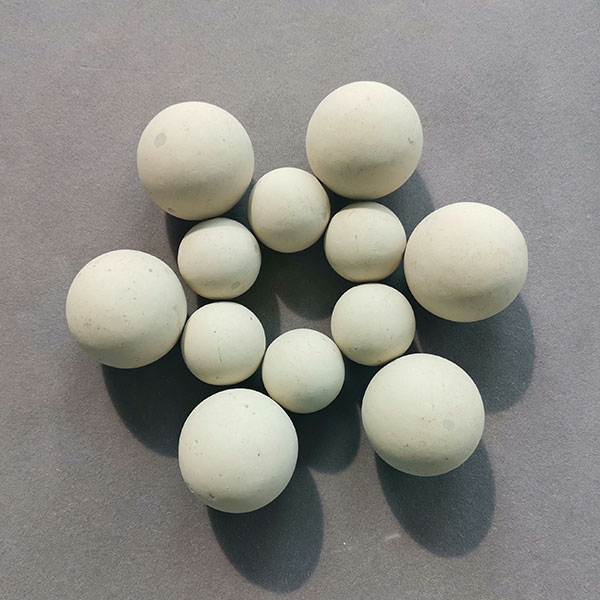
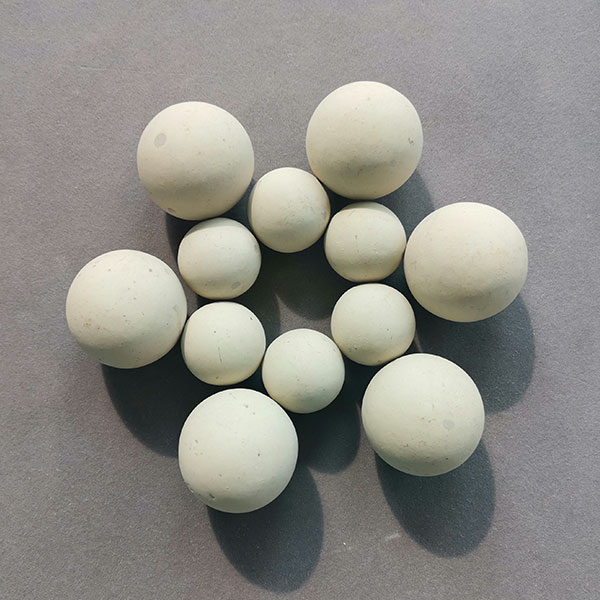
G50 is used for grinding ceramic raw materials and glazes, including applications in tableware ceramics and artistic ceramics. It is produced by rolling and has a white, spherical appearance.
If you need better roundness and stable whiteness after firing, give G50 Alumina Silicate Composite Grinding Ball a try. The reasons are as follows:
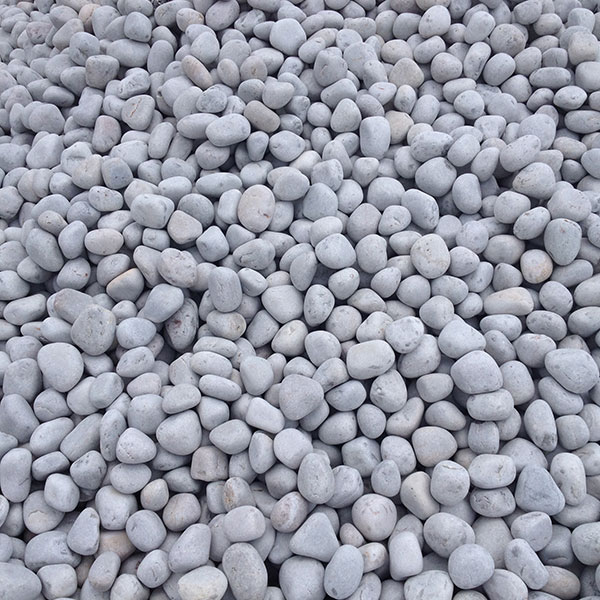
However, the pebbles are only lightly processed, so they are not perfectly spherical, and their size and shape vary from piece to piece.
G50 is produced in a controlled spherical shape. Standard sizes are Φ30 mm, Φ40 mm, and Φ50 mm. Other sizes can also be produced according to customer requirements.
The more uniform shape and size make it easier to maintain a consistent combination of grinding media in the mill.

Compared with traditional silica pebbles, G50 offers a more consistent spherical shape and lower wear while maintaining a similar density.
Al₂O₃ | <45% | Balanced composition with good impact resistance |
Fe₂O₃ | <0.5% | Low iron content, helping reduce color contamination during grinding |
Bulk Density | ≥2.60 g/cm³ | Close to natural and machine-made silica pebbles, making replacement easier |
Water Absorption | <0.01% | Dense structure with very low water absorption |
Self-wear Rate | <0.14‰ | Lower wear rate, reducing grinding media consumption |
Mohs Hardness | 8 | High hardness and good wear resistance |
Color | White | Suitable for applications where grinding media color is a consideration |
Forming Method | Rolling | More uniform spherical shape and size |
Lower wear means less media is lost during grinding and less material needs to be added to the mill over time.
G50 has a bulk density of ≥2.60 g/cm³. The density measured in the comparison test was 2.65 g/cm³.
This is close to the 2.62–2.64 g/cm³ density of the natural and machine-made pebbles used in the test.
For ceramic mills already using silica pebbles, the similar density makes it easier to use G50 without making major changes to the media loading.
For white ceramic bodies and glazes, the chemical composition of the grinding media can affect the final color after firing.
G50 contains less than 0.5% Fe₂O₃ and has an alumina-silicate composition. The low iron content helps reduce the risk of color contamination during grinding, making G50 suitable for ceramic products where whiteness after firing is important.
G50 is also white in appearance, which makes it a good fit for white ceramic applications.
Property | G50 |
Al₂O₃ | <45% |
Fe₂O₃ | <0.5% |
Bulk Density | ≥2.60 g/cm³ |
Water Absorption | <0.01% |
Self-wear Rate | <0.1‰ |
Mohs Hardness | 8 |
Color | White |
Forming Method | Rolling |
Standard Sizes | Φ30 / Φ40 / Φ50 mm |
Customized Sizes | Available |
G50 is used for grinding:
Ceramic raw materials
Ceramic glaze
Tableware ceramics
Artistic ceramics
Gaoteng supplies G50 Alumina Silicate Composite Grinding Balls, natural flint pebbles, and machine-round silica pebbles. We can recommend grinding materials and sizes based on the application.